Brief
We developed a real-time digital tool for WADSIH’s workshops that used language models to instantly process group inputs, identify key themes, and display live insights. The tool automatically generated a summary report and presentation, giving participants a clear, unified view of all ideas discussed during the workshop.
Problem
WADSIH (WA Data Science and Innovation Hub) frequently runs workshops and conferences that involve brainstorming, collaboration, and idea sharing. A common challenge they faced was collecting and consolidating everyone’s ideas during these sessions, especially when participants used traditional methods like butcher’s paper to record their thoughts. The process of gathering input from multiple sources and compiling it into a cohesive report afterward was time-consuming and often resulted in incomplete or disjointed outcomes. WADSIH needed a more efficient and streamlined way to capture and consolidate ideas in real-time, while ensuring that all contributions were accurately reflected in the final report.
Solution
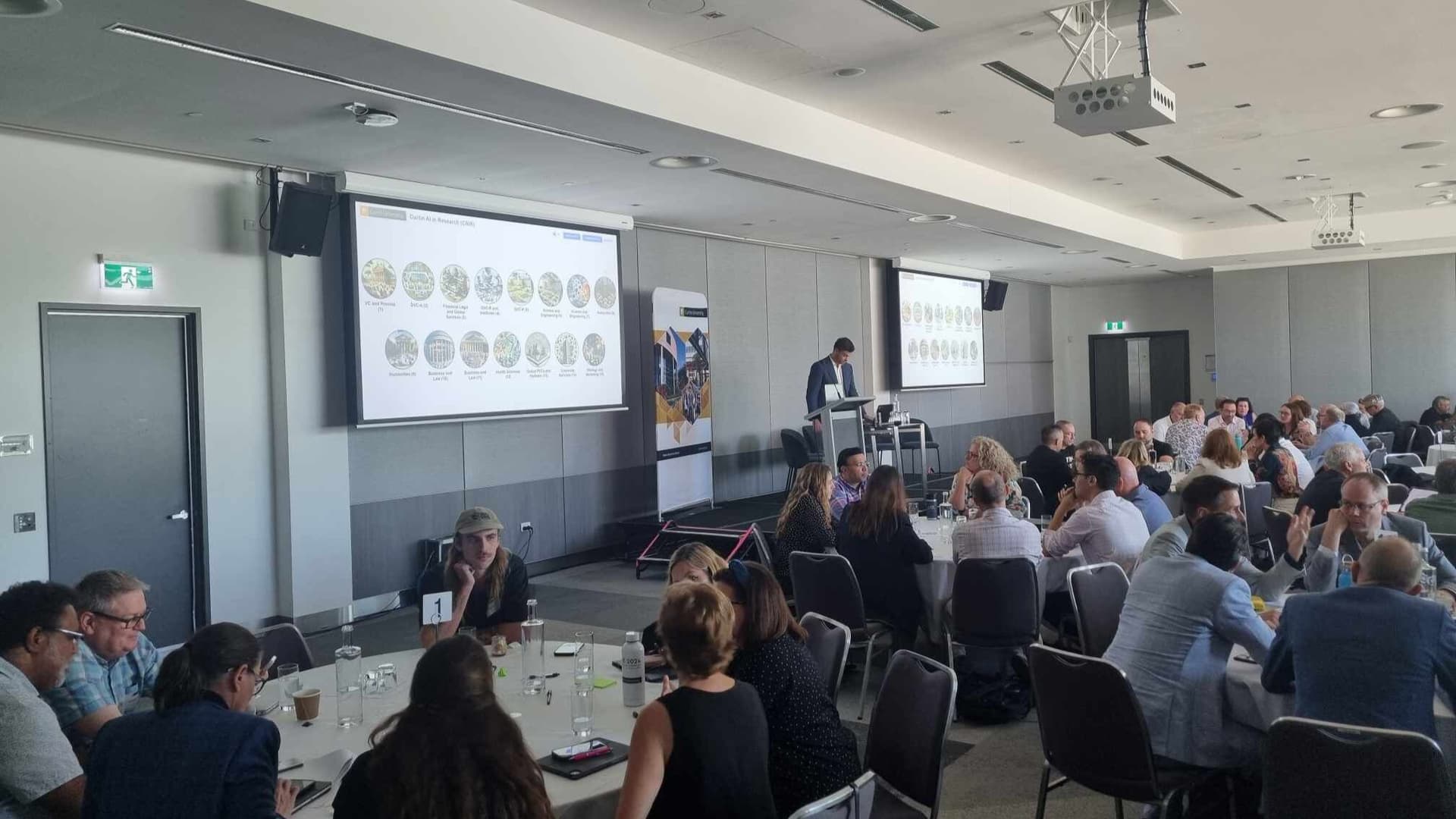
We developed a live digital tool to streamline workshop collaboration and automate reporting. For WADSIH’s workshop, we generated a Google Doc for each of the 10 tables, allowing participants to jot down their brainstorming ideas. As participants entered their thoughts, our tool processed the notes in real time using a large language model (LLM), identifying key themes and trends across all groups. These insights were visually displayed on screens, updating continuously to show how the topics evolved during the session.

Figure 1: Common themes of the workshop identified by a large language model.
Once the brainstorming session was complete, the tool again utilised LLMs to automatically generate a PowerPoint presentation. This presentation summarised the key discussion points from each table, highlighted main themes, and included AI-generated images to enhance engagement. The speaker used this presentation to walk through the results with the entire group, ensuring everyone could see what each table had discussed.Additionally, a detailed report was generated and emailed to all participants after the event, providing a summary of the workshop’s outcomes using AI reporting agents.
Result
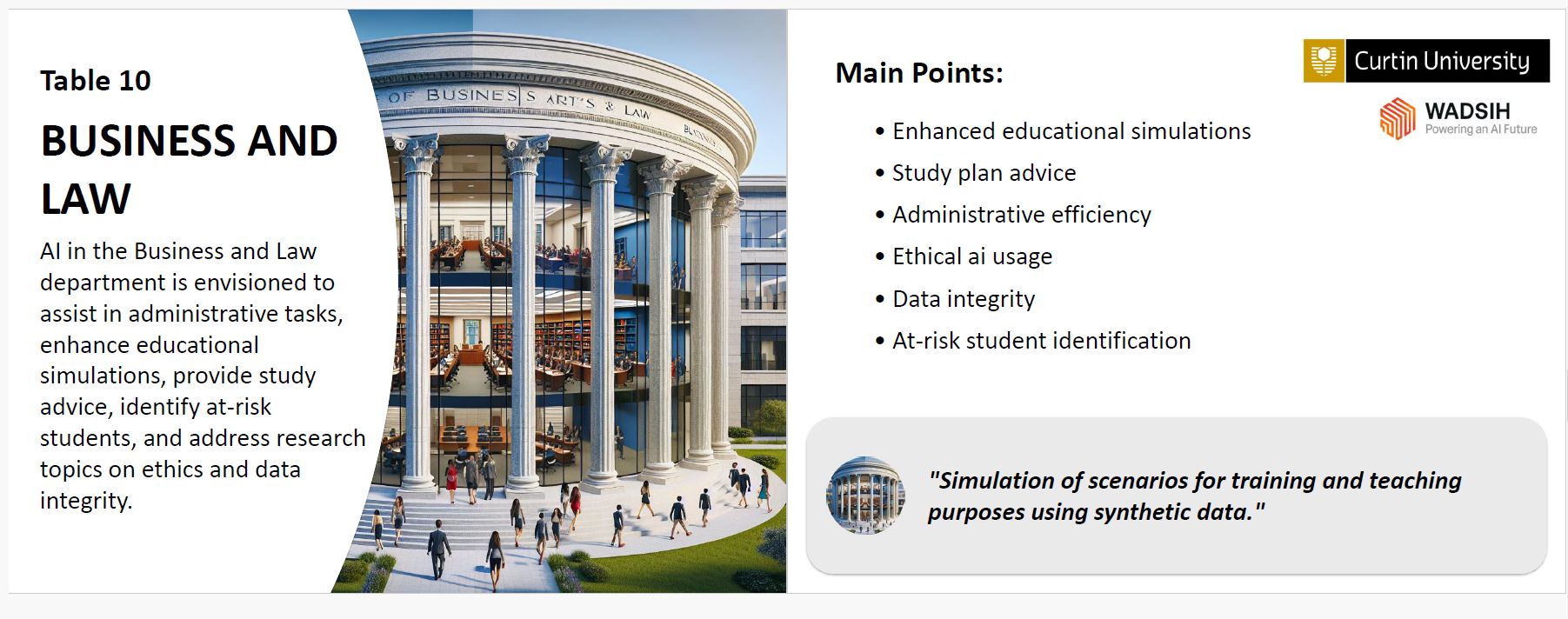
Figure 2: AI Generated PowerPoint.
The impact of the automated live reporting tool was clear. WADSIH no longer needed to manually compile a report after the workshop, saving significant time and effort. Participants found the brainstorming session more productive, as the tool provided a deeper understanding of each group’s ideas in real time. The visual presentation helped participants grasp key themes and insights more effectively, while the automatically generated report gave everyone a clear, concise summary to refer to after the event. This level of insight and efficiency was previously unattainable without AI. With the power of AI, WADSIH was able to gain much quicker, deeper insights into the workshop discussions, enabling faster and more informed decision-making.
Under the Hood
| Industry | Health Research / Stakeholder Engagement |
| Engagement Type | Custom AI tool development |
| Architecture | Real-time LLM processing of live Google Doc inputs, with automated PowerPoint and report generation |
| Integration | Google Docs (one per table), live on-screen display, automated email delivery |
| Output | Live theme visualisation, AI-generated PowerPoint presentation, emailed summary report |
| Key Metric | Manual post-workshop report compilation eliminated entirely |