Manus AI: The First Autonomous Agent

Posted on Mar 26, 2025

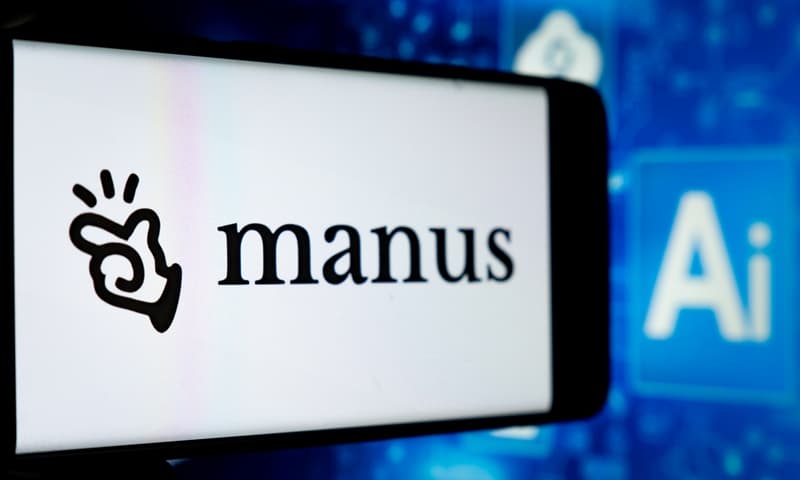
In the rapidly evolving landscape of artificial intelligence, a new player has emerged that promises to fundamentally transform our relationship with technology. Manus AI, developed by Chinese startup Monica, represents a paradigm shift in AI capabilities—moving beyond simple assistance to true autonomy. Unlike conventional AI systems that require constant human guidance, Manus AI can independently plan, execute, and deliver results across a wide spectrum of tasks.

Figure 1: Manus AI – The world’s first fully autonomous AI agent.
Launched on March 6, 2025, Manus AI has quickly captured global attention for its unprecedented capabilities. It doesn’t just respond to prompts or generate content—it takes initiative, makes decisions, and completes complex workflows without human intervention. This level of autonomy represents what many experts are calling the first true general AI agent, capable of bridging the gap between human intent and execution.
Manus AI distinguishes itself through several groundbreaking features:
For businesses and individuals alike, this represents a fundamental shift in productivity. Tasks that once required hours of human attention can now be delegated entirely to Manus AI, freeing people to focus on more creative and strategic endeavors.
Manus AI represents the culmination of years of research in artificial intelligence, combining advanced language models with autonomous decision-making capabilities. Its development marks a significant milestone in the evolution of AI technology.
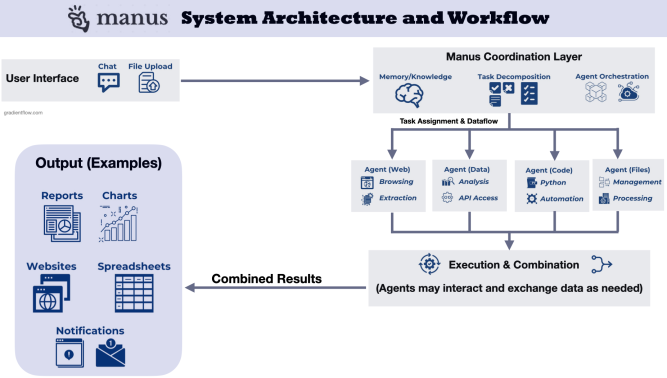
Figure 2: Comprehensive overview of Manus AI’s architecture and capabilities.
At its core, Manus AI employs a sophisticated multi-agent architecture where specialised sub-agents work in concert to accomplish complex tasks:
This architecture allows Manus to tackle multi-step workflows that previously required multiple AI tools stitched together manually. Rather than relying on a single neural network, Manus operates like an executive overseeing a team of specialised workers.
Manus AI demonstrates remarkable versatility across numerous domains:
In each of these areas, Manus AI doesn’t just provide recommendations—it delivers complete, actionable results.
The development of such groundbreaking technology required exceptional talent and vision. Monica, the startup behind Manus AI, has assembled a team of world-class AI researchers and engineers.

Figure 3: The talented team driving Manus AI’s innovation.
At the helm of Manus AI’s development is Yichao “Peak” Ji, co-founder and chief scientist at Monica. With a background in both theoretical AI research and practical applications, Ji has been instrumental in bringing the concept of autonomous agents from academic papers to real-world implementation.
“We’re not just building another AI assistant,” Ji explained in a recent interview. “We’re creating a system that thinks, plans, and acts independently—a true digital worker that delivers end-to-end results without constant human oversight.”
The team also includes:
This diverse team brings together expertise from various disciplines, enabling the holistic approach that makes Manus AI so powerful. Their collective experience spans prestigious institutions including Tsinghua University, MIT, Stanford, and leading tech companies like Alibaba and Google DeepMind.
The Monica team approached AI development with a fundamentally different philosophy than many Western counterparts. Rather than focusing solely on improving language model capabilities, they prioritised autonomous action and real-world utility from the beginning.
“The future of AI isn’t just about better conversation,” Ji notes. “It’s about systems that can actually accomplish things in the world without human handholding at every step.”
This philosophy guided their development process, leading to an agent that emphasises results over interaction—a significant departure from the chatbot-centric approach of many competing systems.
In the rapidly evolving landscape of AI agents, Manus AI has established itself as a formidable competitor to established players. Understanding how it compares to other systems helps clarify its unique position in the market.

Figure 4: Comparative analysis of Manus AI against leading competitors.
While GPT-4 and Claude excel at generating high-quality text and reasoning through problems, they fundamentally remain responsive systems that require continuous human guidance. Key differences include:
Google’s Gemini represents another powerful AI system with multimodal capabilities, but several factors distinguish Manus:
On the GAIA benchmark—designed to evaluate AI systems on real-world problem-solving abilities—Manus AI has reportedly achieved state-of-the-art performance across all difficulty levels, outperforming both GPT-4 and Gemini.
This performance advantage is particularly pronounced in tasks requiring multiple steps, tool use, and independent decision-making—precisely the areas where autonomous agents are designed to excel.
As impressive as Manus AI is today, its current capabilities likely represent just the beginning of a new era in autonomous AI systems. The trajectory of its development points to several exciting possibilities for the future.
Figure 5: Vision for the future evolution of Manus AI as “The All in One AI Agent”.
According to statements from Monica’s leadership team, several enhancements are already in development:
The company has also announced plans to release specialised foundational models for agentic tasks to the open-source community, potentially accelerating development across the entire field.
The rise of truly autonomous agents like Manus AI carries profound implications for work, society, and the future of human-AI collaboration:
The emergence of autonomous agents has already prompted discussions among policymakers globally. China’s approach to regulating Manus AI will likely influence international standards, while differences in regulatory philosophy between regions may create varying adoption patterns worldwide.
Monica has expressed commitment to responsible development, implementing safeguards against misuse and establishing clear accountability mechanisms for autonomous actions taken by Manus AI.
Manus AI represents a watershed moment in artificial intelligence—the transition from AI as a tool to AI as an autonomous actor. By combining advanced language capabilities with independent decision-making and action, it fundamentally changes our relationship with technology.
While questions remain about how this technology will reshape industries and societies, one thing is clear: the era of truly autonomous AI agents has begun, and Manus AI stands at the forefront of this revolution.
As we navigate this new frontier, the balance between embracing the productivity and capabilities these systems offer while establishing appropriate governance will be crucial. The decisions made by developers, users, and regulators in these early days will shape the trajectory of autonomous AI for years to come.
What are your thoughts on autonomous AI agents like Manus? How do you envision using such technology in your work or life? Share your perspectives in the comments below—the conversation about our AI-enabled future is just beginning.
If you’re considering AI but aren’t sure where to begin, get in touch.